|
|
ANTHIAS aka FAIRY BASSLETS
|
| Underwater photography: images of anthias taken while scuba diving |
| Dottyback anthias | Purple anthias | Redfin anthias | Scalefin anthias | Squarespot anthias |
| Family: Serranidae, Sea bass: groupers and fairy basslets Order: Perciformes Class: Actinopterygii (ray-finned fishes) |
|
|
|
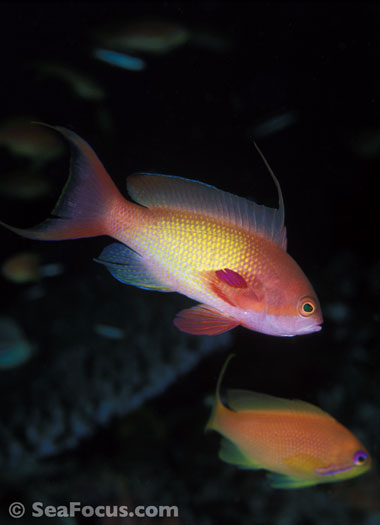
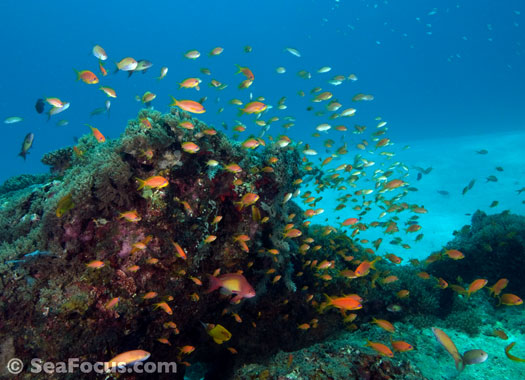
Anthias are members of the true bass family, Serranidae. This highly diverse marine group has 50 genera and over 400 species including anthias, groupers and soapfish.
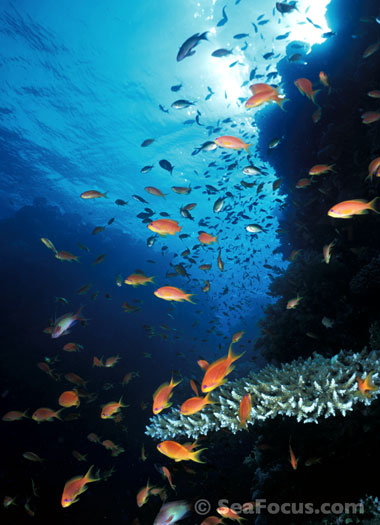
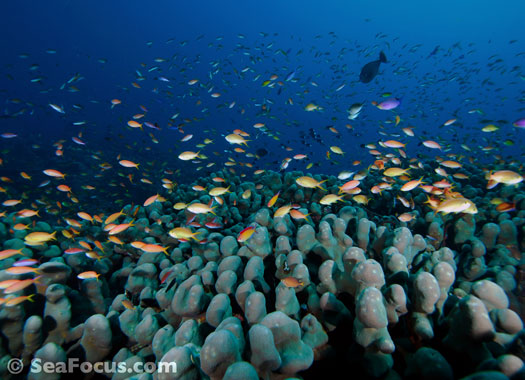
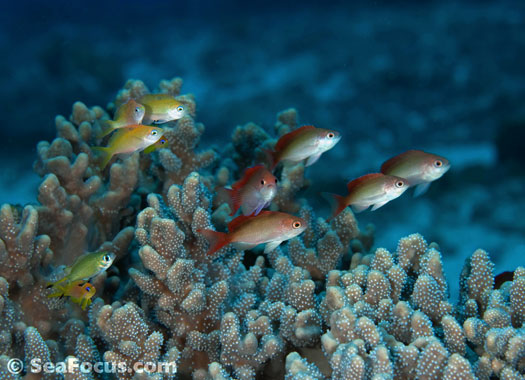
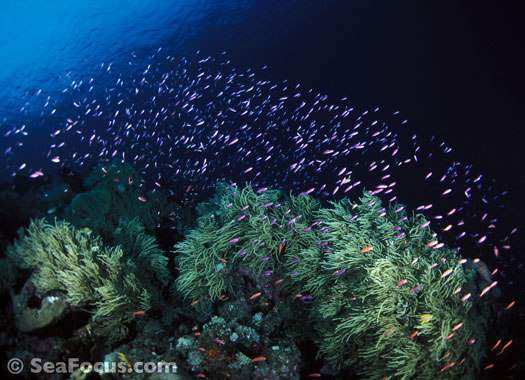
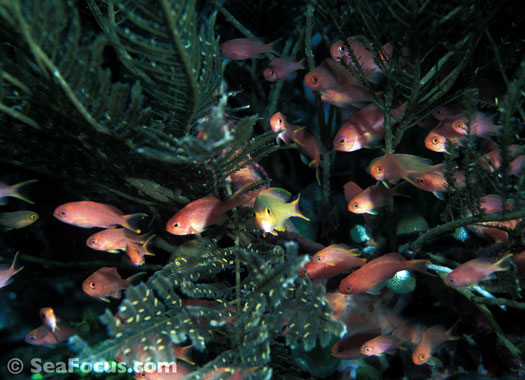
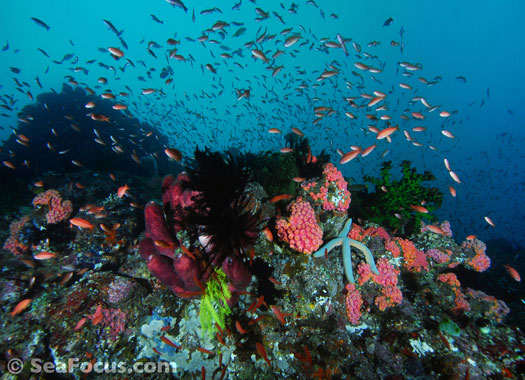
Often called fairy basslets, which somehow seems more appropriate, anthias are found right around the world on tropical reefs. There’s a local form as far north as Japan and as far south as the Great Barrier Reef. They live in relatively shallow water and amongst hard and soft corals where there are plenty of nooks and crannies to retreat to. Yet these small fish also like to be in places that get some hefty waves – dashing about in the surge is probably their favoured form of exercise.
All fairy basslets live in a large group called a harem, sometimes with as many as 2000 in the group. Yet in amongst that vast number there will rarely be more than one adult male who sits at the top of a very specific pecking order. The overall shoal will consist primarily of juveniles and adult females. In some species there will also be a few non-territorial males. Rather like the eunuchs in the harem, these are greatly outnumbered by the juveniles and females.
|
|
|
Anthias
image gallery
|
| click any image to enlarge |
Int. = intermediate stage
Juv.= juvenile |
|
|
 |
 |
 |
 |
 |
 |

|
|
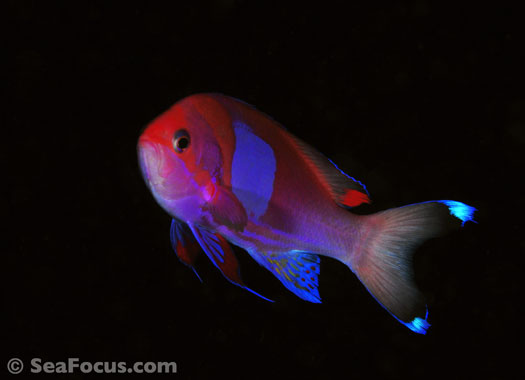
Scalefin anthias
– male
|
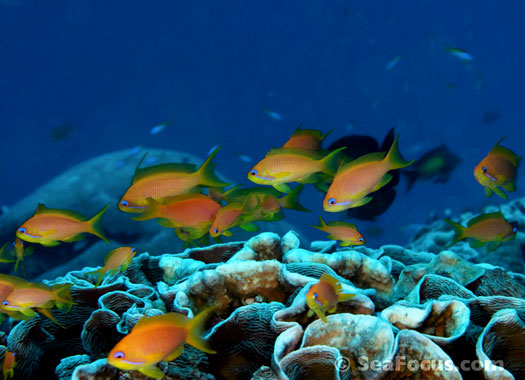
Scalefin anthias
– female
|
Redfin anthais
– male
|
Tanzania - poss. Yellow-eye
|
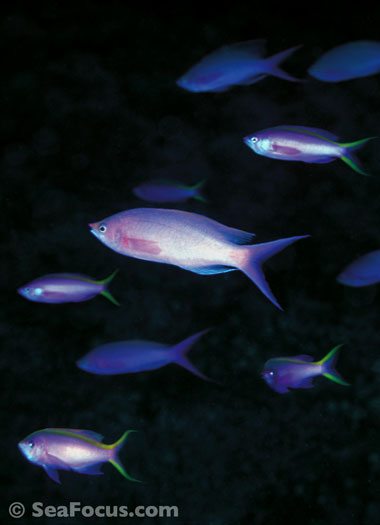
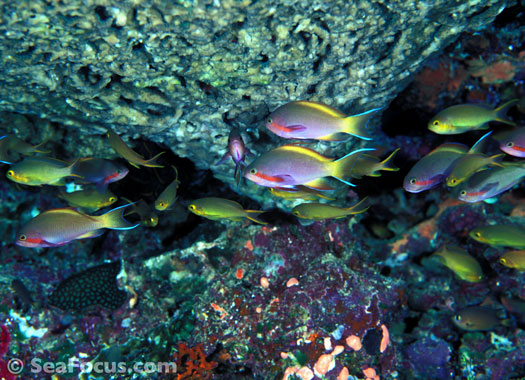
Purple anthias – male in centre
|
Mixed anthias – Indonesia
|
Zanzibar – unknown species |
 |
 |

|
|
|
|
|
| Squarespot anthias – male |
Scalefin anthias
– female |
Threadfin anthias
|
Purple Queen anthias
|
Scalefin anthias
|
Tanzania – poss. Bartlett's
|
Dottyback anthias
|
|
|
|
|
|
|
|
|
|
|
Few anthias species have been assessed regarding their status as threatened, but are regarded as vulnerable.
|
|
| Athias encounters |
LOCATION:
Grenada
|
DIVE SITE:
Happy Valley |
DEPTH:
12 metres |
SPECIES:
Pomacanthus paru |
COMMON NAME:
French angelfish |
|
|
|
|
|
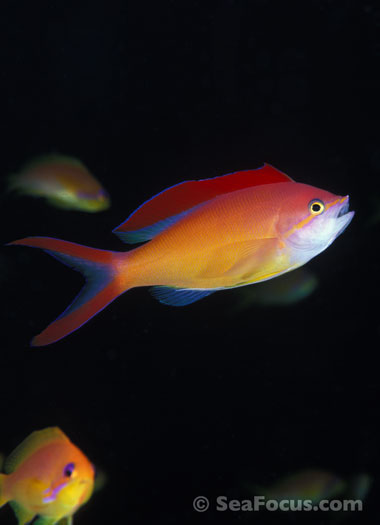
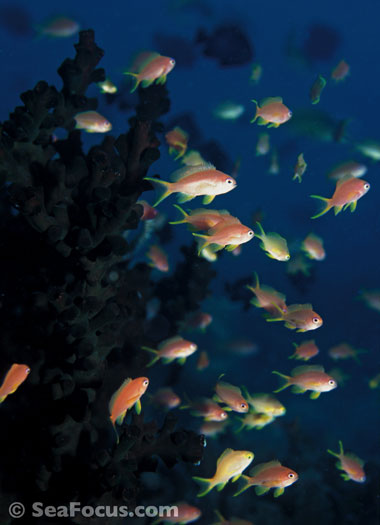
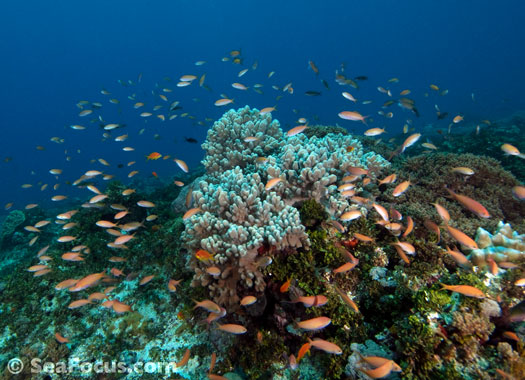
Watching a group of anthais is like sitting at your computer watching an aquarium screen saver. In, out, in, out as hundreds of anthias are highlighted against the blue sea background, all swooping across the reef in a perfect choreographed movement. But look closely and one fish might catch your eye. If he is a different colour and pattern it's probably the male.
The lone male lords it over his group like the ruler of the Harem. When he dies, another male develops from the largest, most dominant female who is usually about two years old. The first signs of a female sex change are a darkening of the head and fins then a gradual changing of skin pattern to match the male version. These initial changes take about 16 days but it will take another month or so before she becomes a fully fledged chap.
|
 |
|
|
|
|
|
| SPECIES NAMES | Many fish can be hard to identify as they are so similar. Common names vary and even scientists disagree on what is what. If you can name anything we can't, please get in touch.
ORDER | Images on this page are available to buy as prints. Take a note of the name then go to the
photo order form...
SEARCH SeaFocus | Looking for something on this site? Type in a few words below...
|
|
|
|
|
|