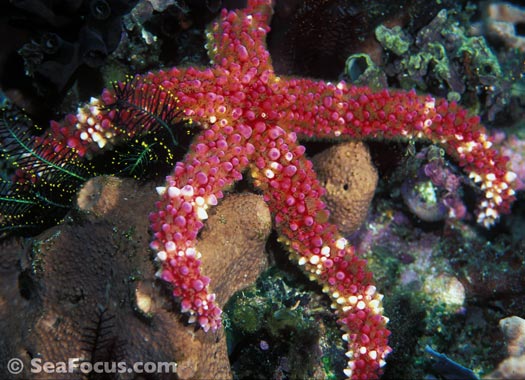
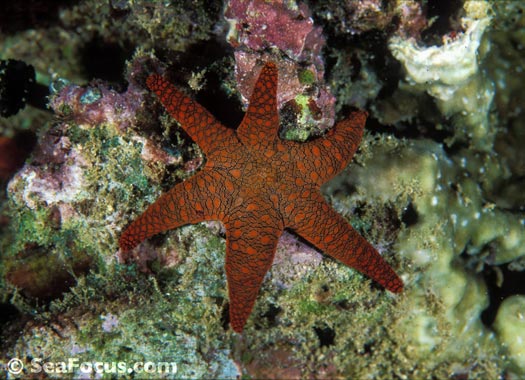
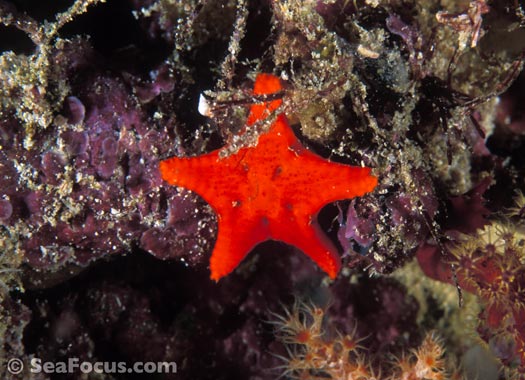
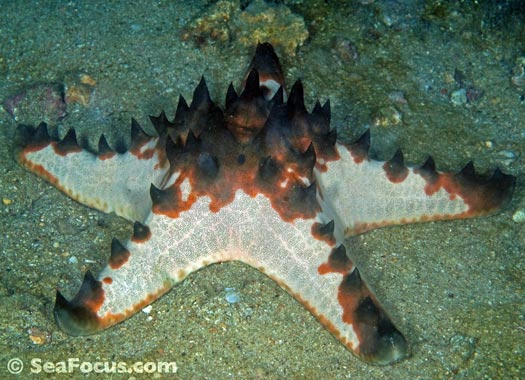
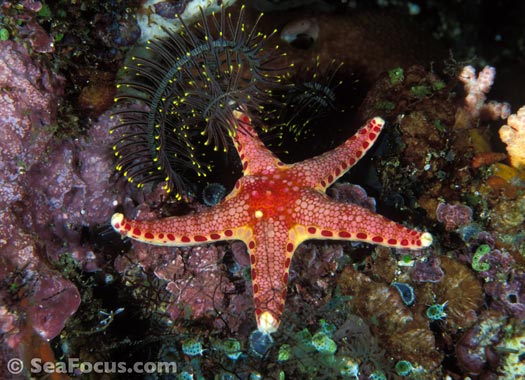
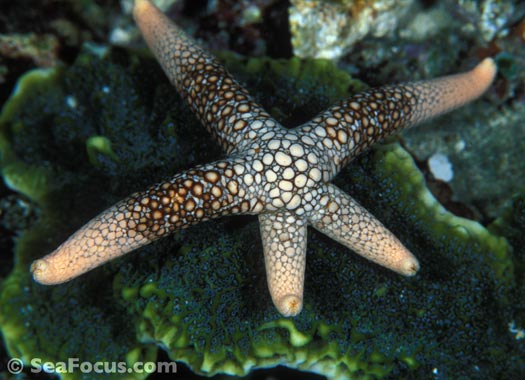
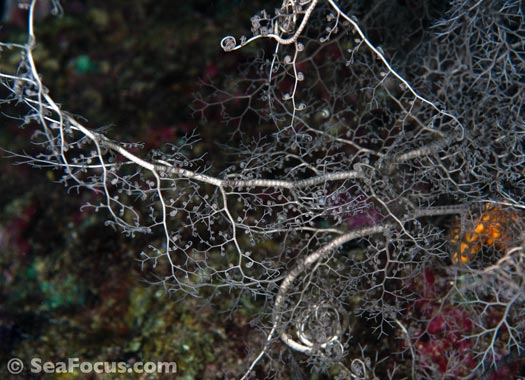
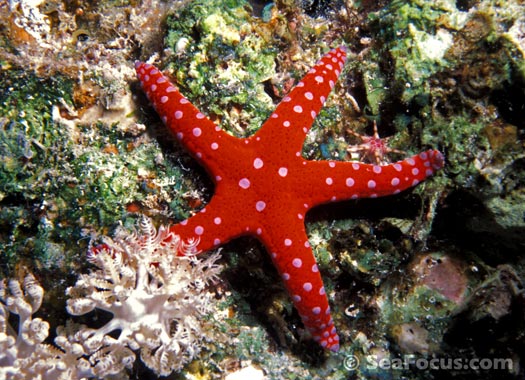
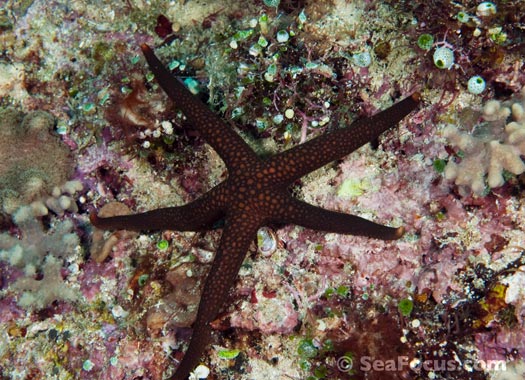
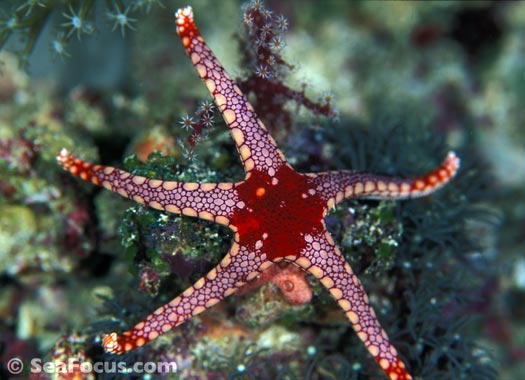
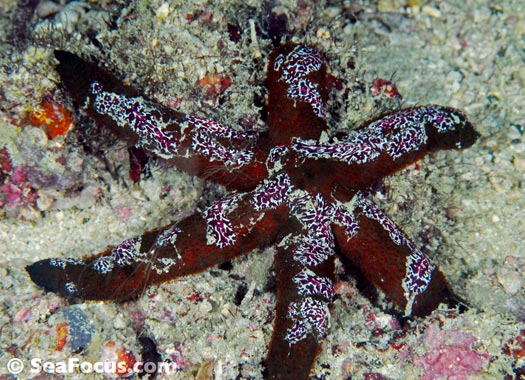
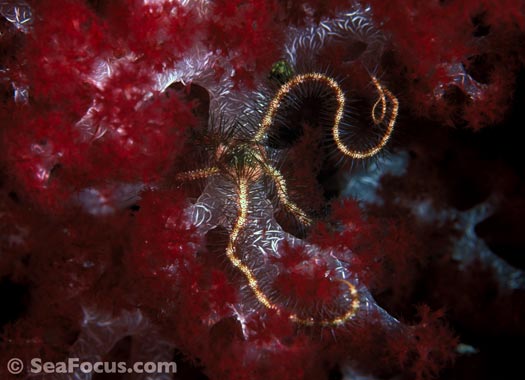
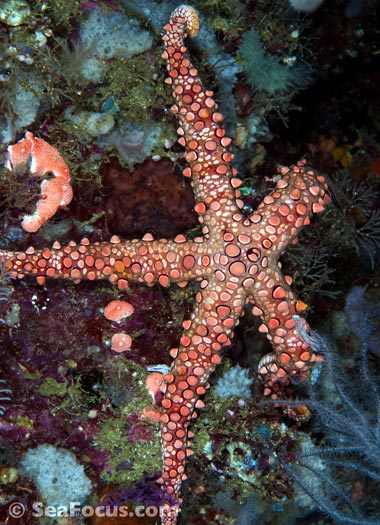
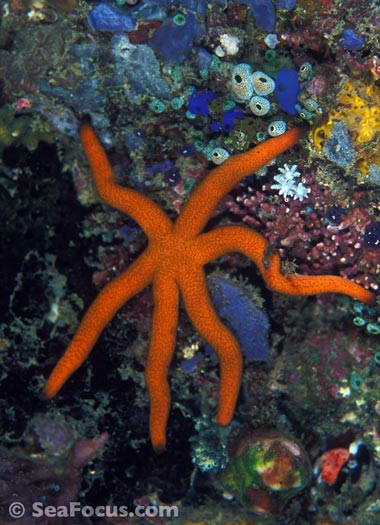
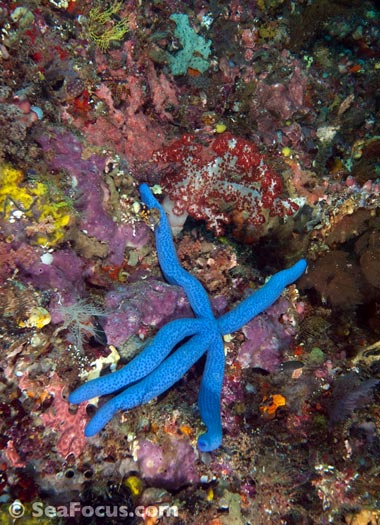
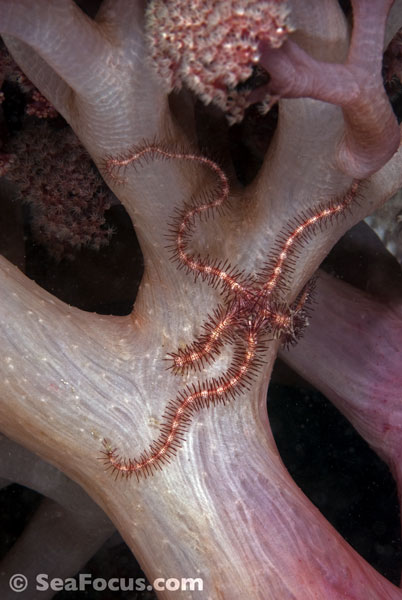
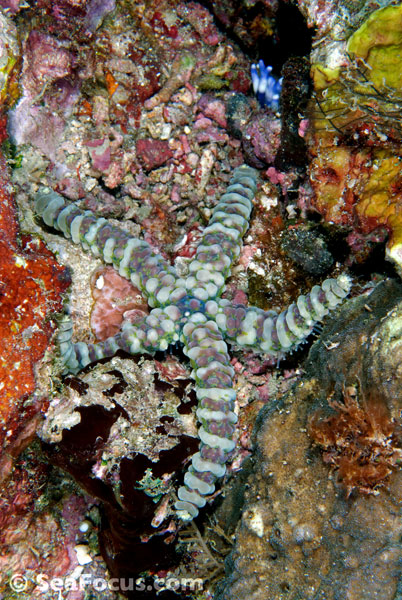
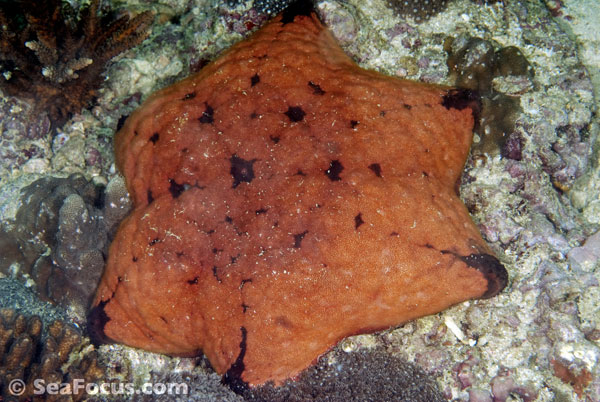
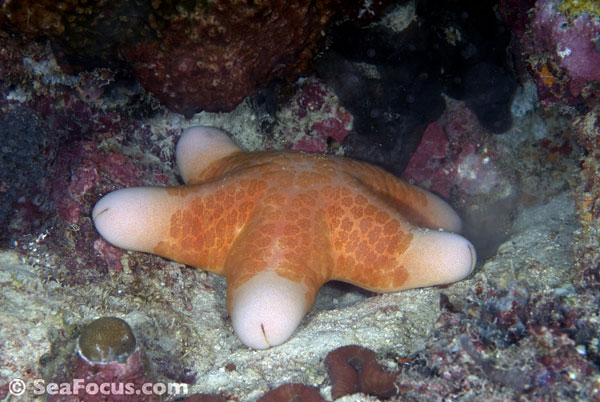
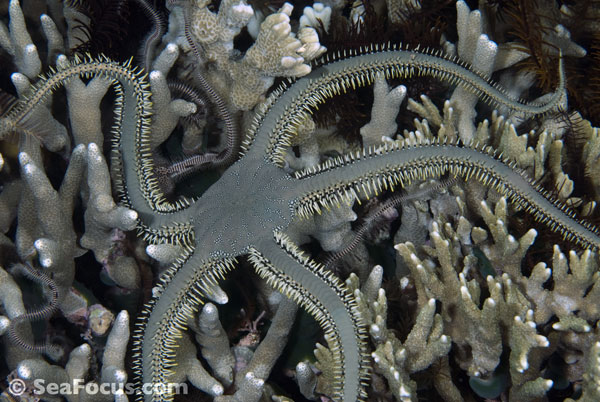
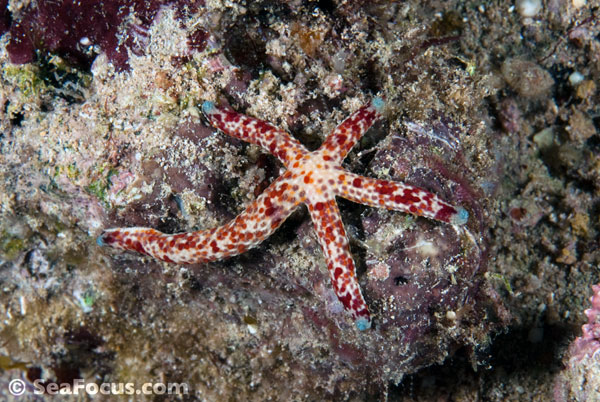
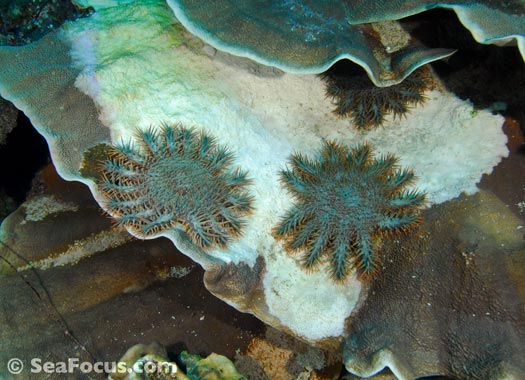
Starfish are members of a diverse clan, the Echinoderms, which translates as spiny skin. This group includes brittle stars, sea stars, sea cucumbers and sea urchins. In fact, 6,500 species lurk on the branches of this unusual family tree.
What links the members of this marine group together is their five-point radial symmetry. Their bodies consist of five equal segments, each containing duplicate sets of internal organs, which radiate from a central body mass. This is fairly obvious in a starfish, less so in their relatives. They have no heart, brain or eyes, but some seem to have light sensitive parts on their arms. Mostly their mouth is situated on their underside and their anus on top.
Starfish motion is slower than the proverbial tortoise. They use a complex hydraulic system to move around or cling to surfaces. On their base a mass of tiny tubes run along a distinctive groove in each arm. At the tip of each is a diminutive suction pad – or foot – which is hydraulically controlled by a remarkable system where water is sucked in through a sieve plate on top of their body, then pulsed through interconnecting canals to the toes.
The most incredible starfish feature is their defence mechanism, which is the capability to regenerate. Should they lose an arm (or is it a leg) to a predator, then no problem! They just grow another. Or if an arm gets misplaced, it can regenerate itself into a whole new creature.