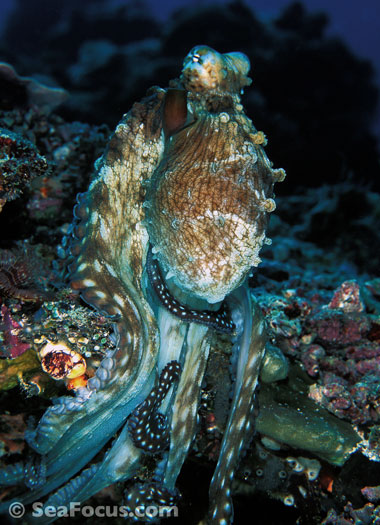
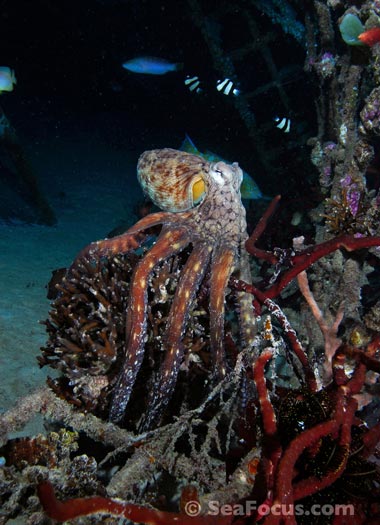
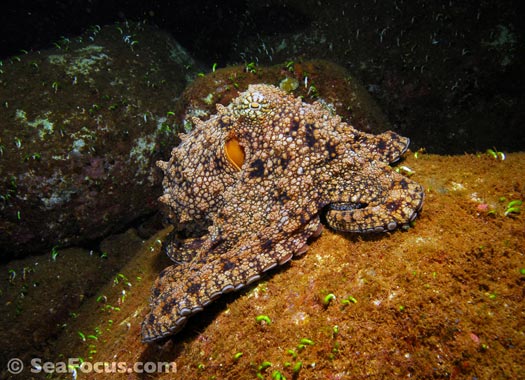
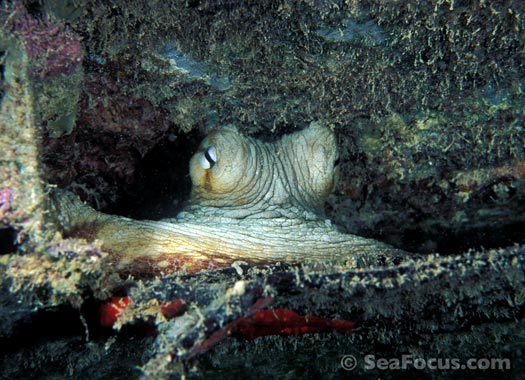
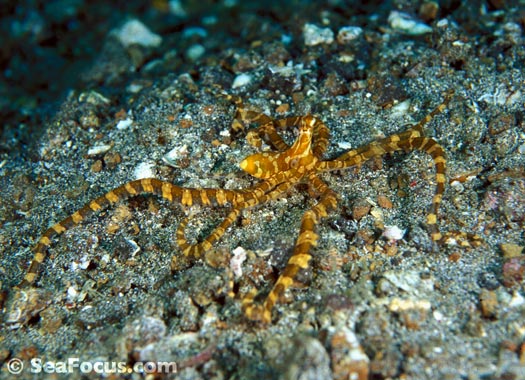
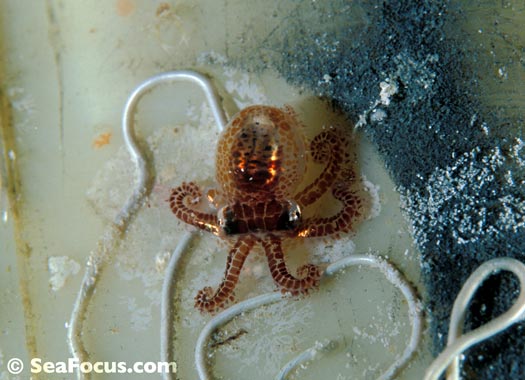
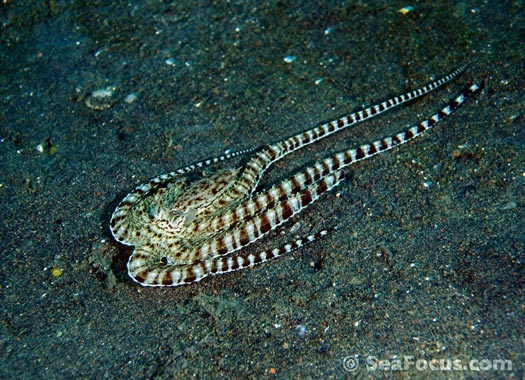
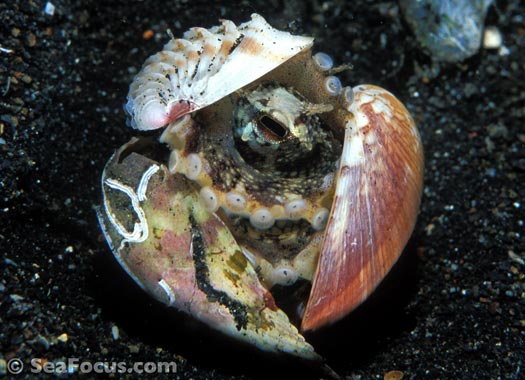
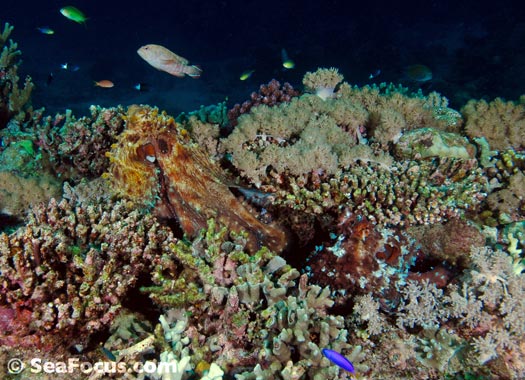
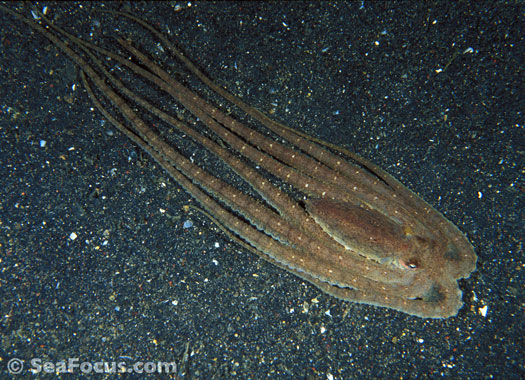
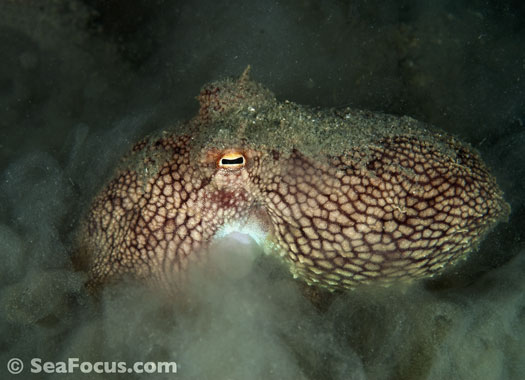
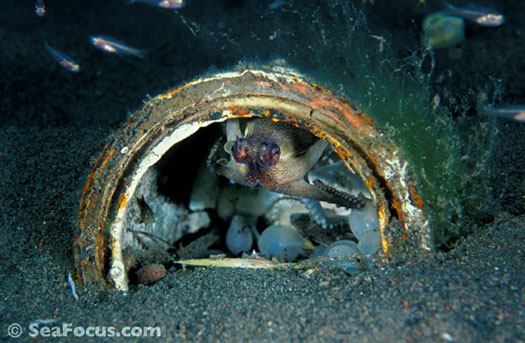
Octopus are part of a large marine group, the Cephalopods with relatives such as squid, cuttlefish and the nautilus. The family name comes from Greek and means head-footed. There are over 100 octopus species including numerous deep-water and pelagic versions.
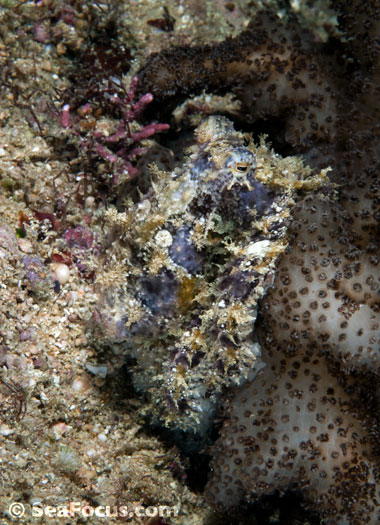
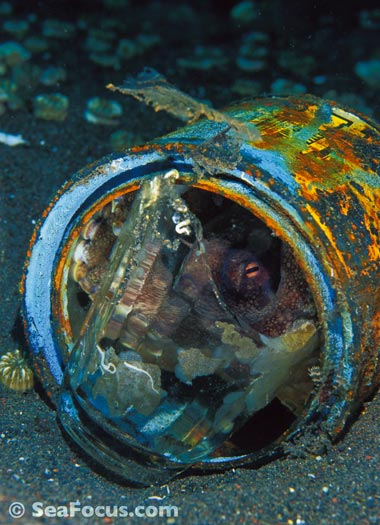
All octopus are soft-bodied creatures, with that huge head-body and eight long limbs, referrred to as arms, extending from it. These form a circle that encapsulates their mouth. All cephalopods have a shell of some sort – it's just not all that obvious in most – and in octopus it has reduced right down to two rods that are inside the bulbous body. These animals are incredibly entertaining underwater and have a very high level of intelligence. They can also see in much the same way that we can so will often spend a long time watching a diver. Octopus are quite hard to identify as they are all masters of camouflage, capable of changing their appearanc eat will.
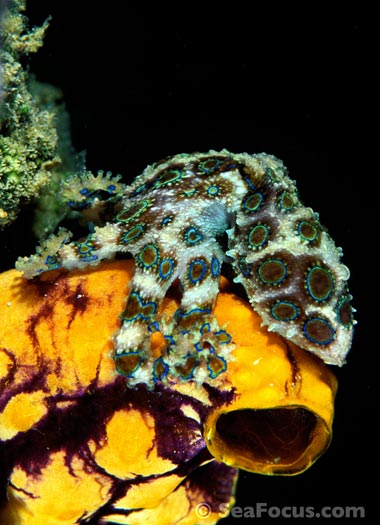
The Pacific Giant Octopus is the largest in the species, growing to about 30 feet across while way down along the family chain is the venomous blue-ringed octopus at just a few centimetres – and one of the most dangerous animals in the ocean. This tiny creature uses venom as a knock-out drug. He doesn't inject it into prey but secretes a toxic salvia. Although human deaths are uncommon, the Blue-ring found in Australian waters is particularly dangerous and shoud not be handled. Most deaths have occured when unwary people pick them up!