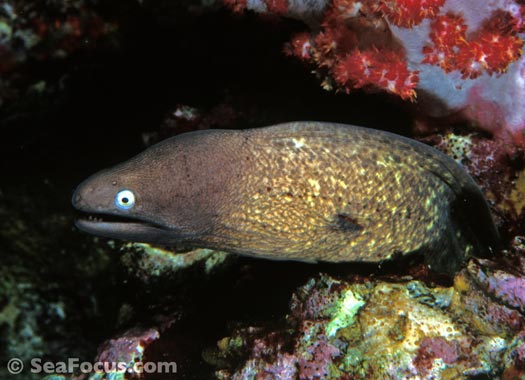
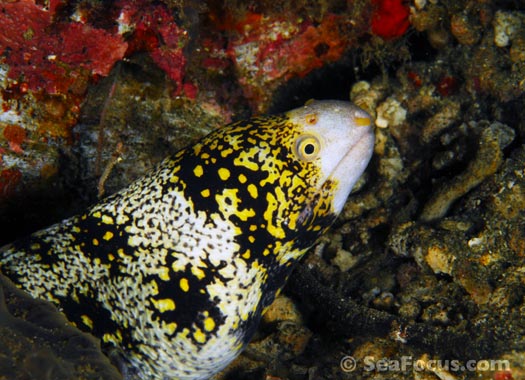
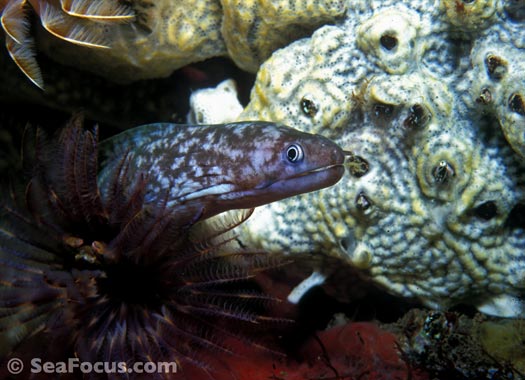
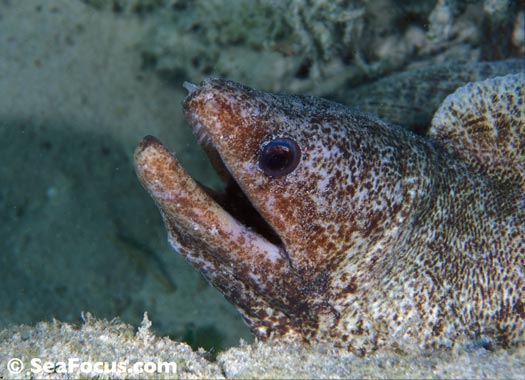
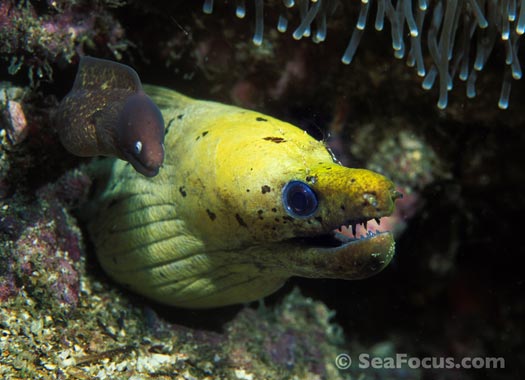
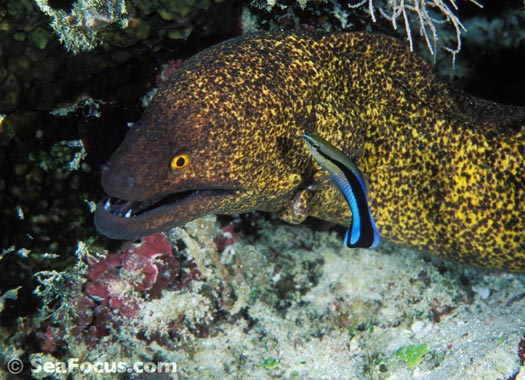
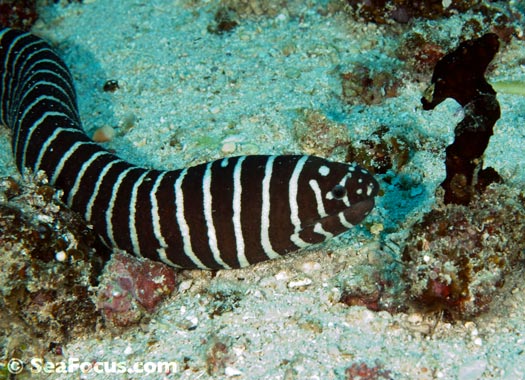
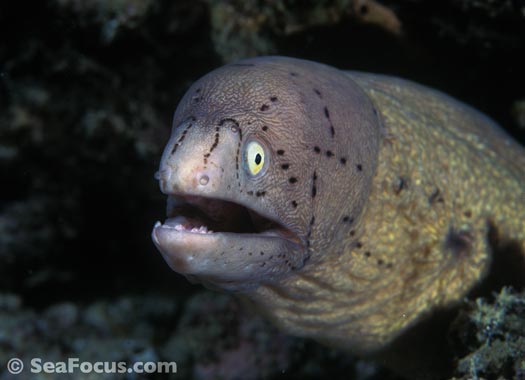
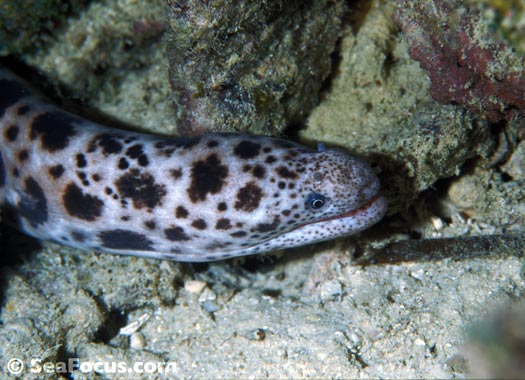
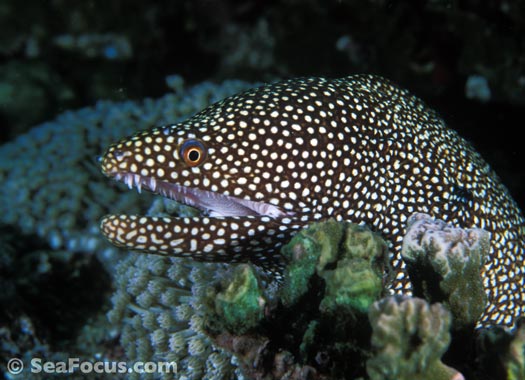
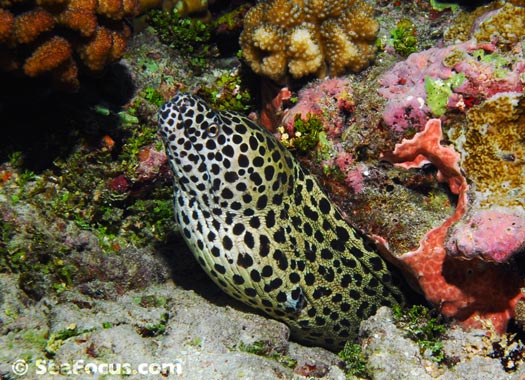
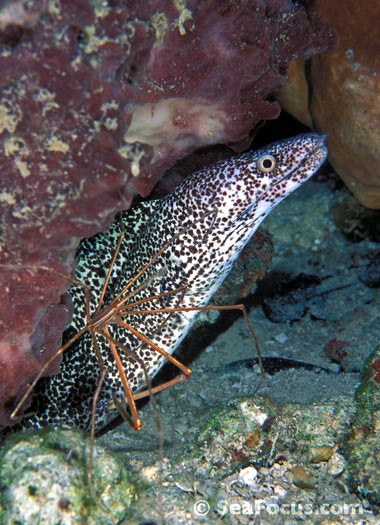
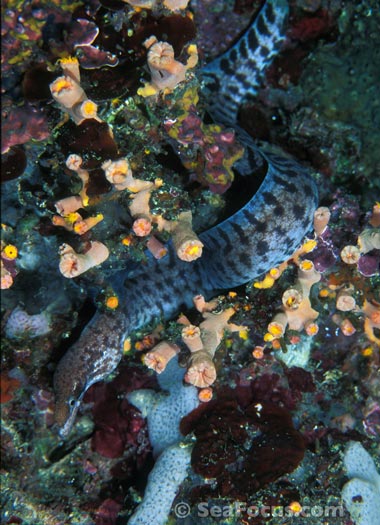
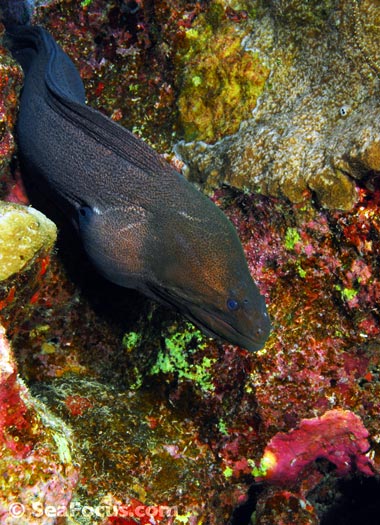
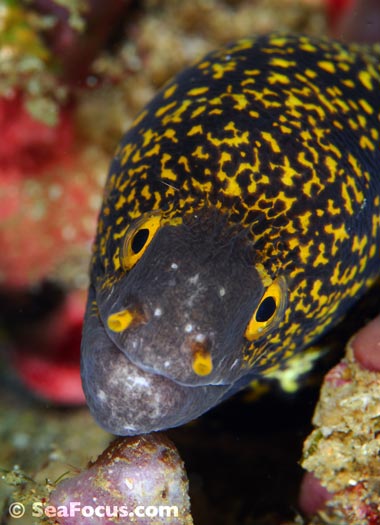
Morays are true eels and fall inside the order Muraenidae. All told there are 12 genera and, over 200 species across this broad group, more than any other fishy family except perhaps the wrasses. Morays are found all over the world but subtropical to tropical seas are favoured haunts.
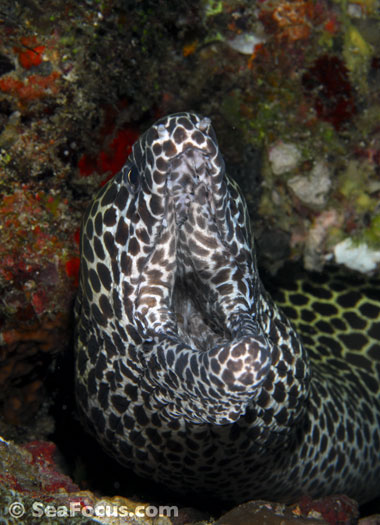
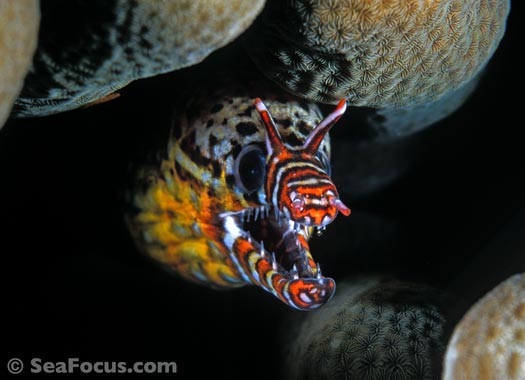
Moray eels tend to hang out in comparatively shallow waters, searching out hidey holes where they can get away from bright light. During the day you only see their head protruding from the entrance to this shelter, disguising the fact there may be a 3-metre long creature in there.
Most morays are nocturnal, emerging after dark to search for prey. Morays lack scales, caudal, pelvic and pectoral fins, instead they move by flexing their long, continuous dorsal and anal fins. They have soft and slimy skin that is can be grazed by rough handling. They are usually spotted when they poke their heads up into the water column. The scary-looking, open-mouthed attitude is actually due to small, restricted gill openings without covers. Simply put, they're breathing while they use their keen sense of smell. Moray eyesight isn’t particularly good, so they rely on smell to sense what is going past.
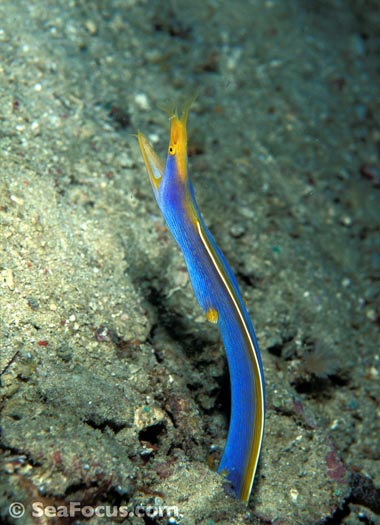
One of the most outstanding of the moray group is the blue ribbon eel.
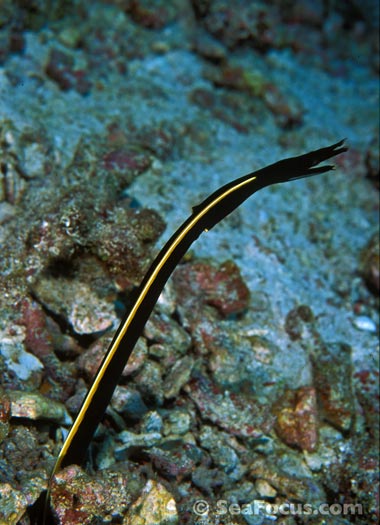
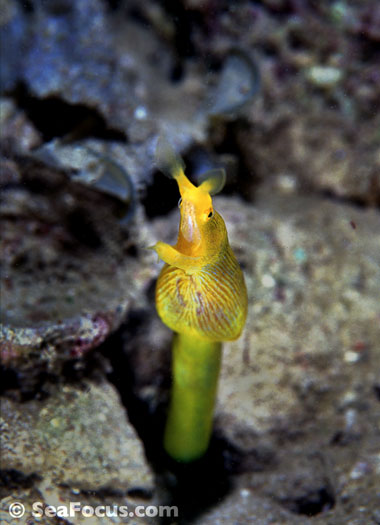
A true eel, ribbon eels are the only member of the genus Rhinomuraena. Adult males are blue with a yellow dorsal fin, females are yellow with a black anal fin and juveniles are jet black with a yellow dorsal fin.